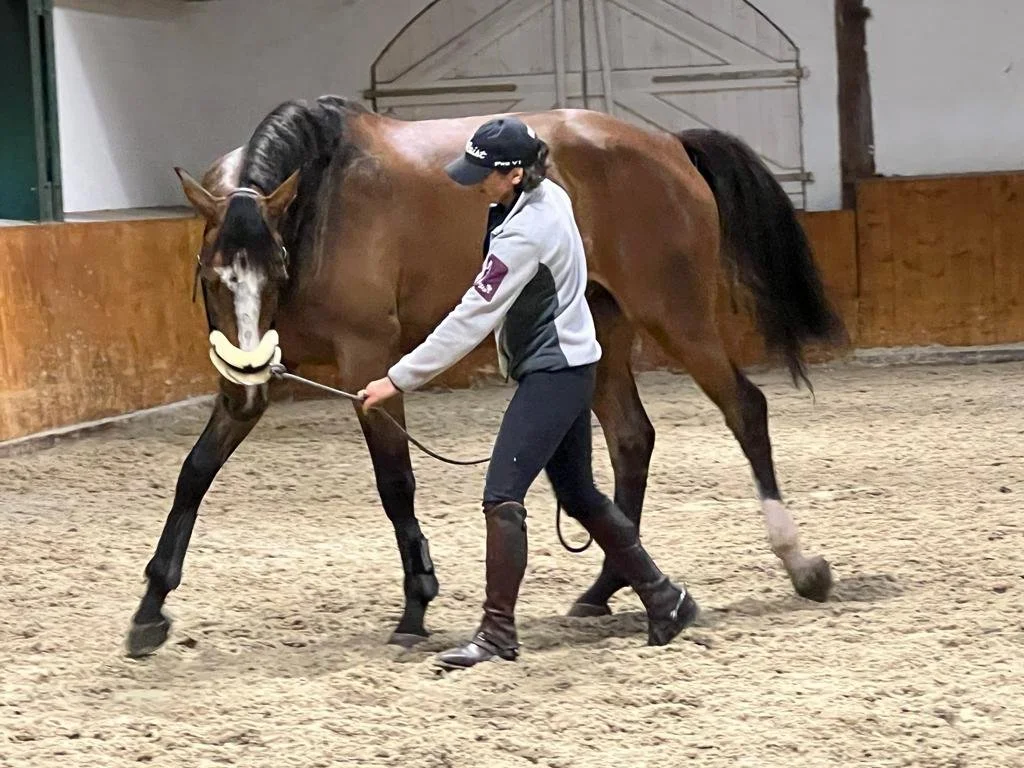
Osteopathy & Tensegrity-Based Equine Training
Biomechanically advanced therapy & conditioning for sport horses
Optimizing movement patterns, structural balance, and performance through evidence-informed osteopathic and tensegrity-based protocols.
Biomechanically advanced therapy & conditioning for sport horses
Optimizing movement patterns, structural balance, and performance through evidence-informed osteopathic and tensegrity-based protocols.
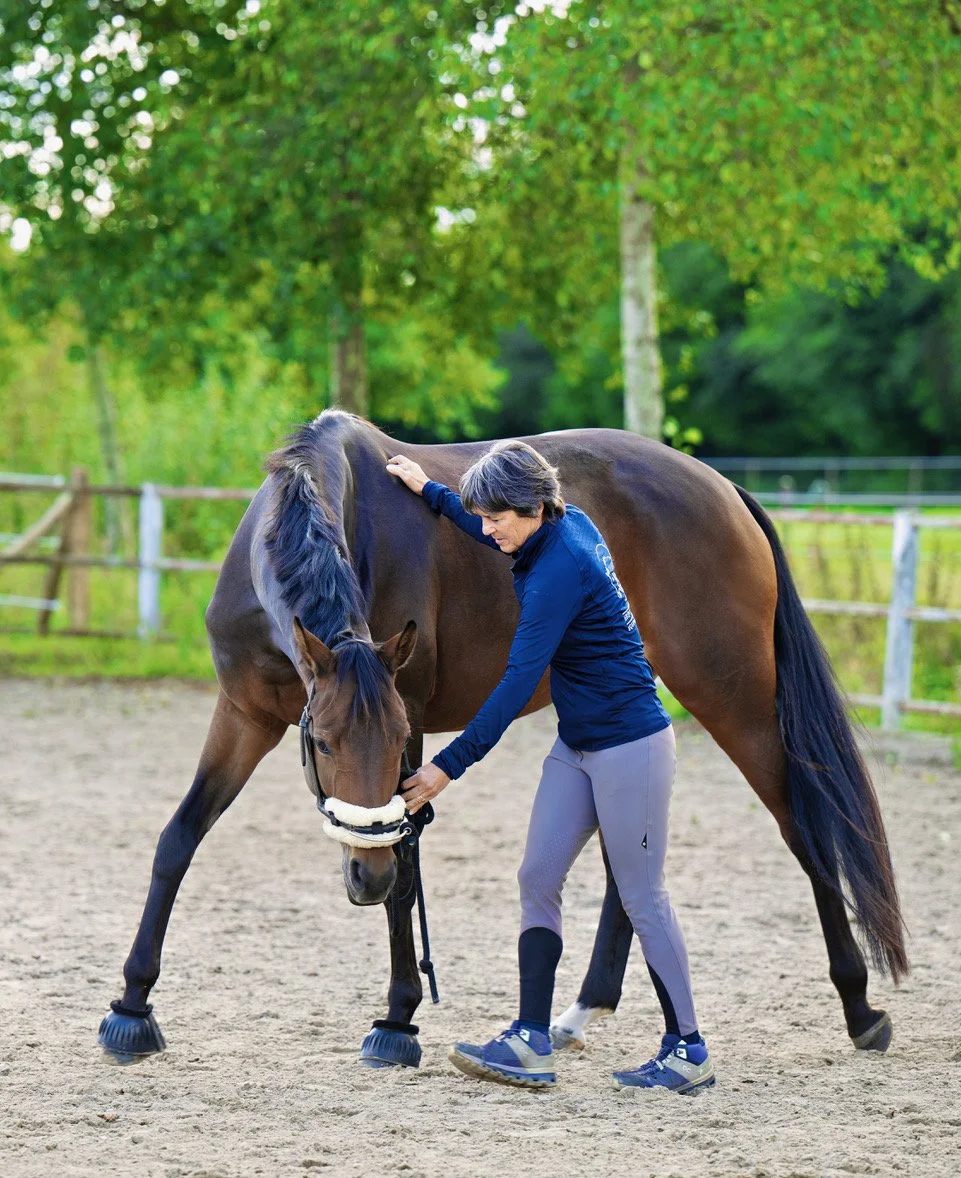
What We Address
Movement Issues in Sport Horses
We work with sport and show jumping horses that aren't able to reach their full potential – often it's subtle limitations that make the difference between a good and an outstanding performance.
Do you recognize any of these patterns in your horse?
Less power in the take-off: Your horse jumps flat, struggles over oxers, or shows less scope than before
Problems after landing: Your horse takes longer to find its balance, or becomes stiff and uncoordinated in tight turns
Limited hindquarter activity: Less push from behind, flat canter strides, or difficulty with tempo changes
Asymmetries under saddle: Your horse is noticeably better on one rein, drifts sideways, or is harder to bend on one side
Stiffness in key joints: Blocked shoulders, a tight back, or limited mobility in the pelvis – visible in stiff transitions or lack of throughness
Quick fatigue or tension: Your horse fades during a course or training, shows early signs of tension, or recovers slower than expected
Why this matters: These patterns are often signs of blockages or imbalances in the myofascial system – not a lack of talent or training. With targeted work, these limitations can be resolved so your horse can move freely and perform at its best again.
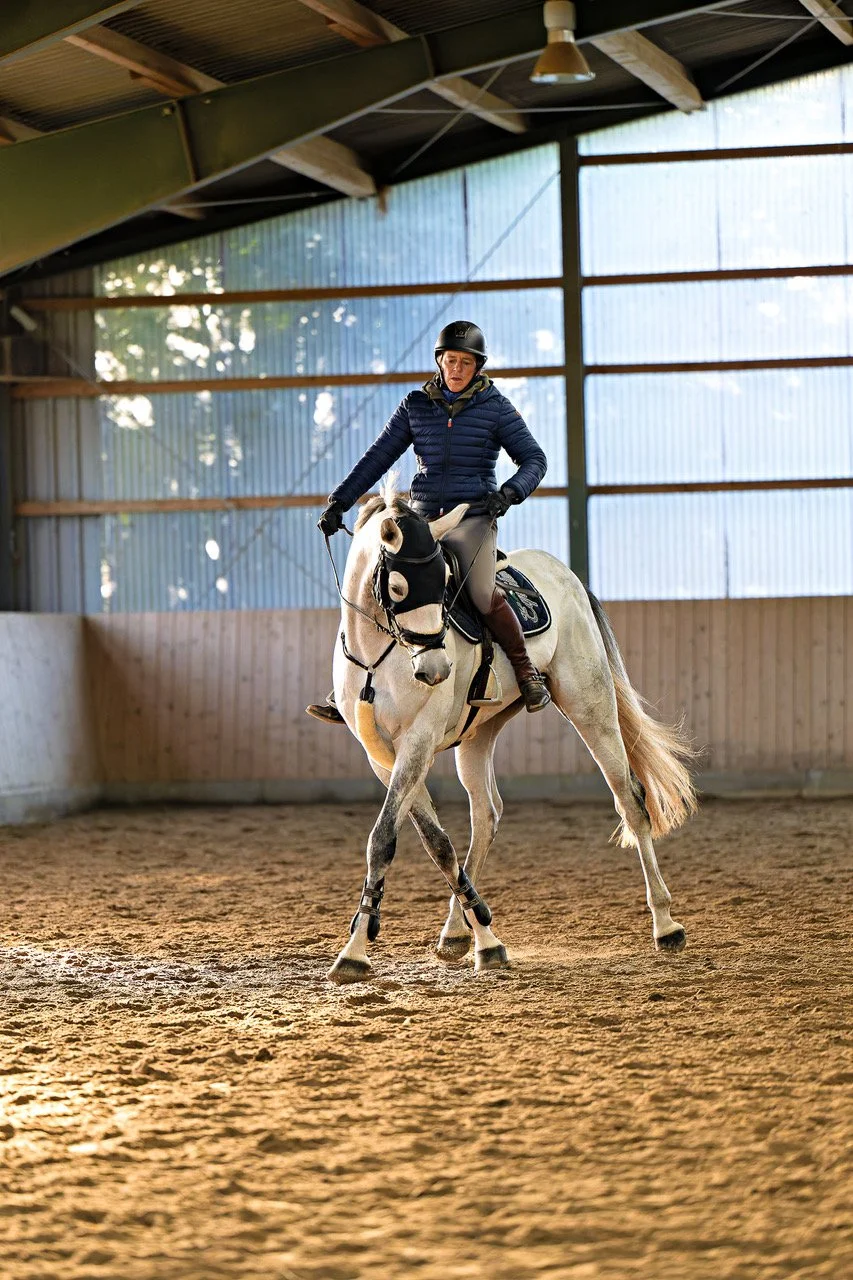
Our Approach
Biomechanical Integration
We combine structural osteopathy with tensegrity-based training to get the best out of your sport horse – more performance, better movement quality, and a longer career.
Osteopathy Manual examination and treatment of soft tissues, fascia, joints, and neuromuscular systems. Blockages are released so your horse can fully use its body again – for more powerful take-offs, greater elasticity in the gaits, and a resilient topline.
Tensegrity Training A training approach that brings the entire network of muscles and fascia into balance. The result: optimal power transfer when jumping, faster rebalancing after landing, and better load distribution – essential for horses that regularly face high demands on course or in intense training.
Why this combination? Both methods complement each other perfectly: Osteopathy creates the foundation by releasing restrictions. Tensegrity training ensures your horse actually uses this newfound freedom of movement and translates it into lasting performance – whether on course, in the dressage arena, or in cross country.
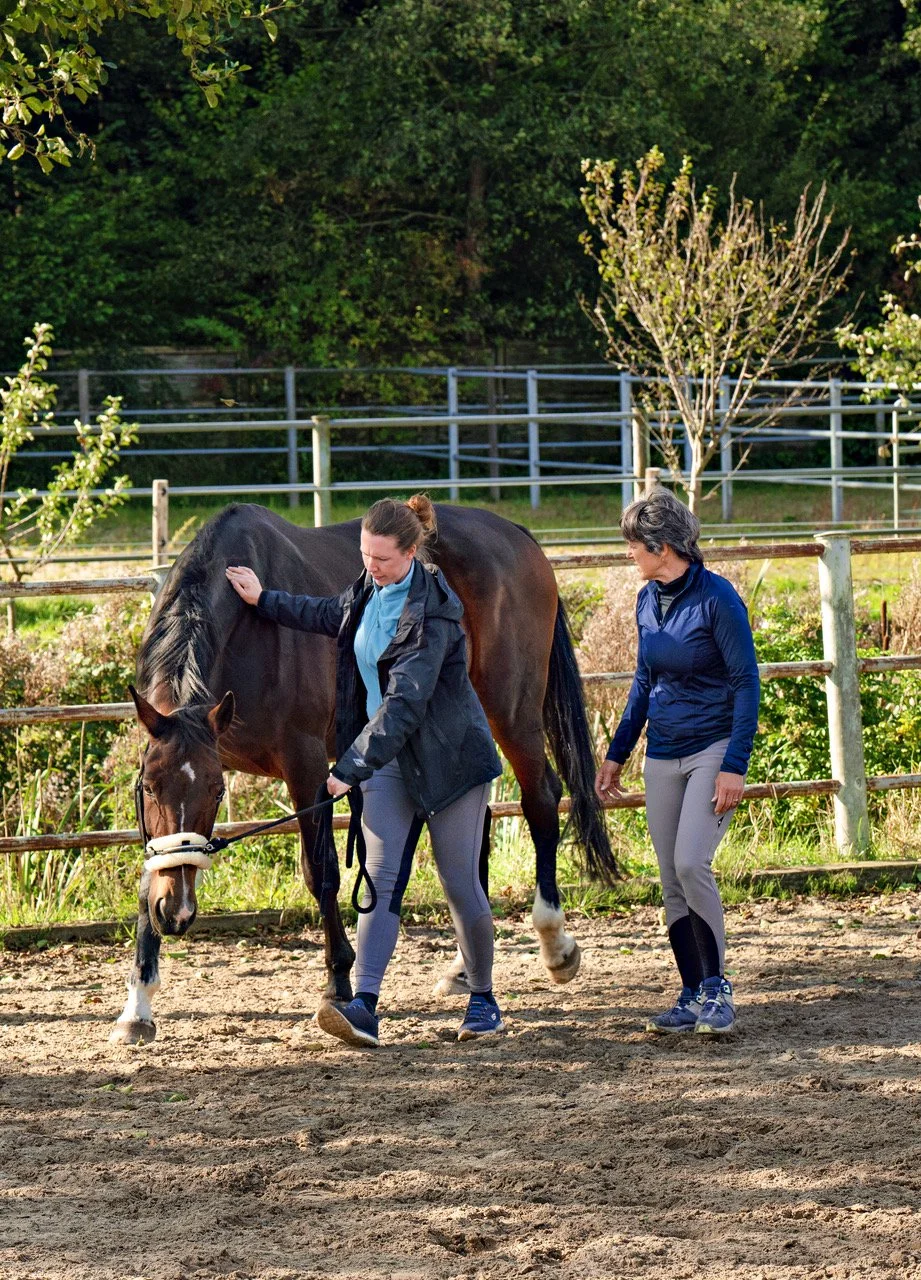
Evidence-Informed Biomechanics
What is Tensegrity in Horses?
Think of your horse's body as a precisely balanced network: muscles, fascia, and connective tissue work together to form a system that enables stability, power, and mobility. When this system functions optimally, your horse can reach its full athletic potential.
When this network falls out of balance, it often shows in subtle details: less power in the jump, lack of elasticity in the gaits, difficulty collecting, or a horse that doesn't perform as expected despite talent and good training.
What does this mean for your sport horse?
More performance in the arena and on course: A balanced system enables more powerful take-offs, better collection, and more expressive movement
More agile and responsive: Your horse finds its balance faster – whether after landing on course, in tight turns, or during demanding movements
Faster recovery: A well-connected body regenerates more efficiently after intense training sessions or demanding competition weekends
Less wear and tear: Stress is distributed more evenly – protecting joints, tendons, and back, extending your horse's career
Reaching full potential: Many horses have more talent than they can show – Tensegrity training helps unlock these reserves

What Tensegrity Training means for Your Sport Horse
Functional Outcomes Include:
More expression and quality in movement A balanced system enables more elastic, powerful gaits and stronger jumps – visible in every extended trot, flying change, or over the oxer.
Better balance and body control Your horse carries itself more easily, finds its balance faster, and can master demanding movements, technical courses, or long cross-country tracks with more confidence.
Consistent performance at competitions A body without blockages and compensations is more resilient – your horse can deliver its best performance, even under the pressure of competition day or at the end of a long season.
Longer career, fewer setbacks Joints and tissues are loaded more evenly. This reduces wear and helps prevent injuries – so your horse can perform at a high level for longer.
Finer communication in the saddle When the body can work freely, your horse responds more sensitively to your aids. The result: more harmony and precision – whether in the dressage arena, on course, or across country.
Training & Treatment Flow
Every horse is different – that's why my work always begins with a thorough analysis before focusing on performance improvement. My goal: more performance, less wear and tear – for more powerful take-offs, better balance, and a longer career.
What I treat:
Muscular restrictions and asymmetries: Tension in the shoulder, hindquarters, or back that limits power and mobility – visible in uneven canter strides or one-sided contact
Fascial blockages: Adhesions in the connective tissue that disrupt movement flow and prevent your horse from moving freely through the course or arena
Weakness in topline and core stability: An inactive topline or weak abdominal muscles affect jumping ability and the capacity to collect
The Process:
1. Initial Assessment I analyze your horse's biomechanics and movement in detail. Where are the restrictions? Which patterns are preventing your horse from showing its full potential?
2. Treatment Using a combination of osteopathic and tensegrity-based techniques, I release blockages and bring the myofascial system back into balance – individually tailored to your horse's needs and the demands of your discipline.
My techniques include:
Myofascial release techniques: Gently releasing adhesions and tension in the fascial network to restore tissue glide – essential for fluid movement and quick direction changes on course
Deep tissue mobilization: Targeted work on tight muscle groups such as the longissimus, gluteals, and shoulder muscles – for more thrust from the hindquarters and more powerful take-offs
Joint mobilization: Gentle techniques to improve mobility in the spine, pelvis, and shoulder – so your horse can bend, collect, and balance better
Trigger point therapy: Releasing painful tension points that are often responsible for resistance, stiffness, or performance decline
Visceral techniques: Treating tension in the abdominal area that can affect the back and freedom of movement
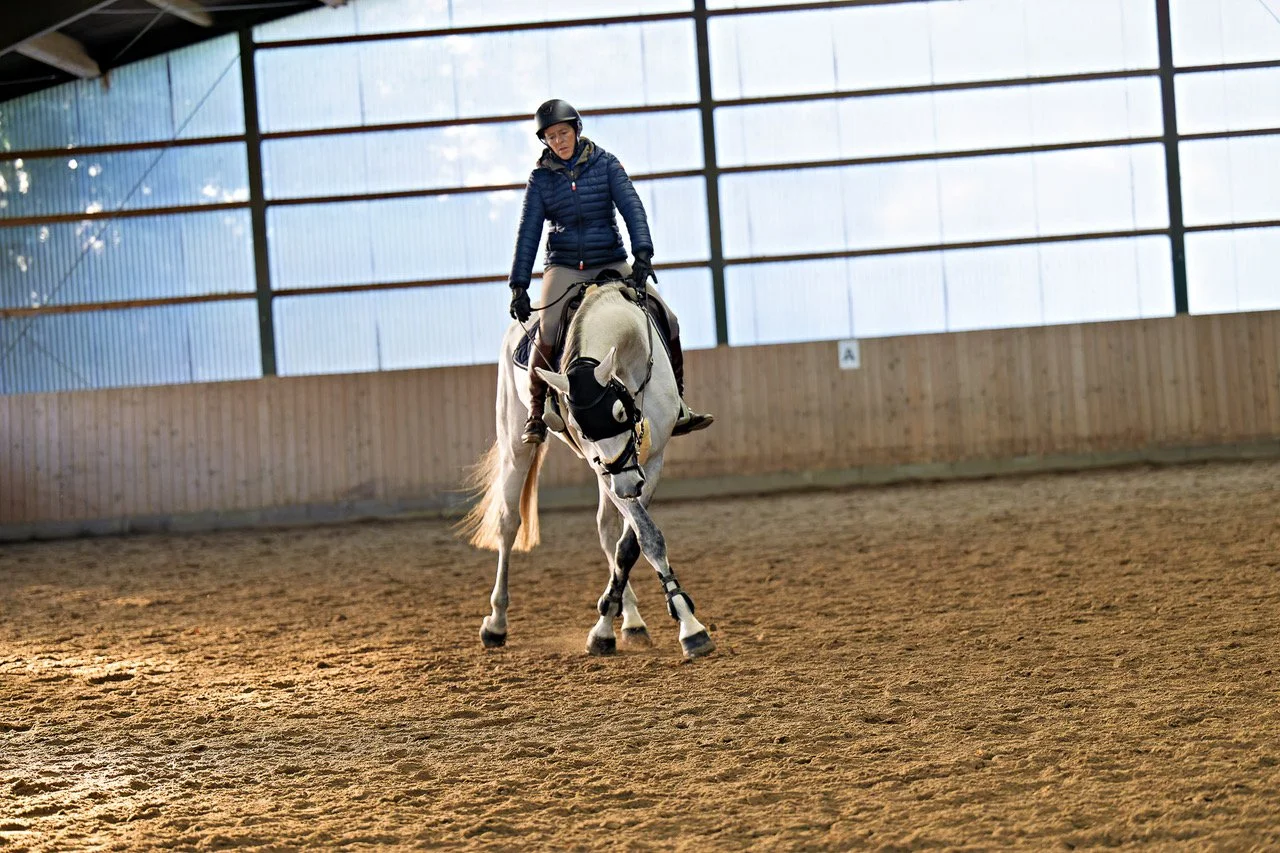
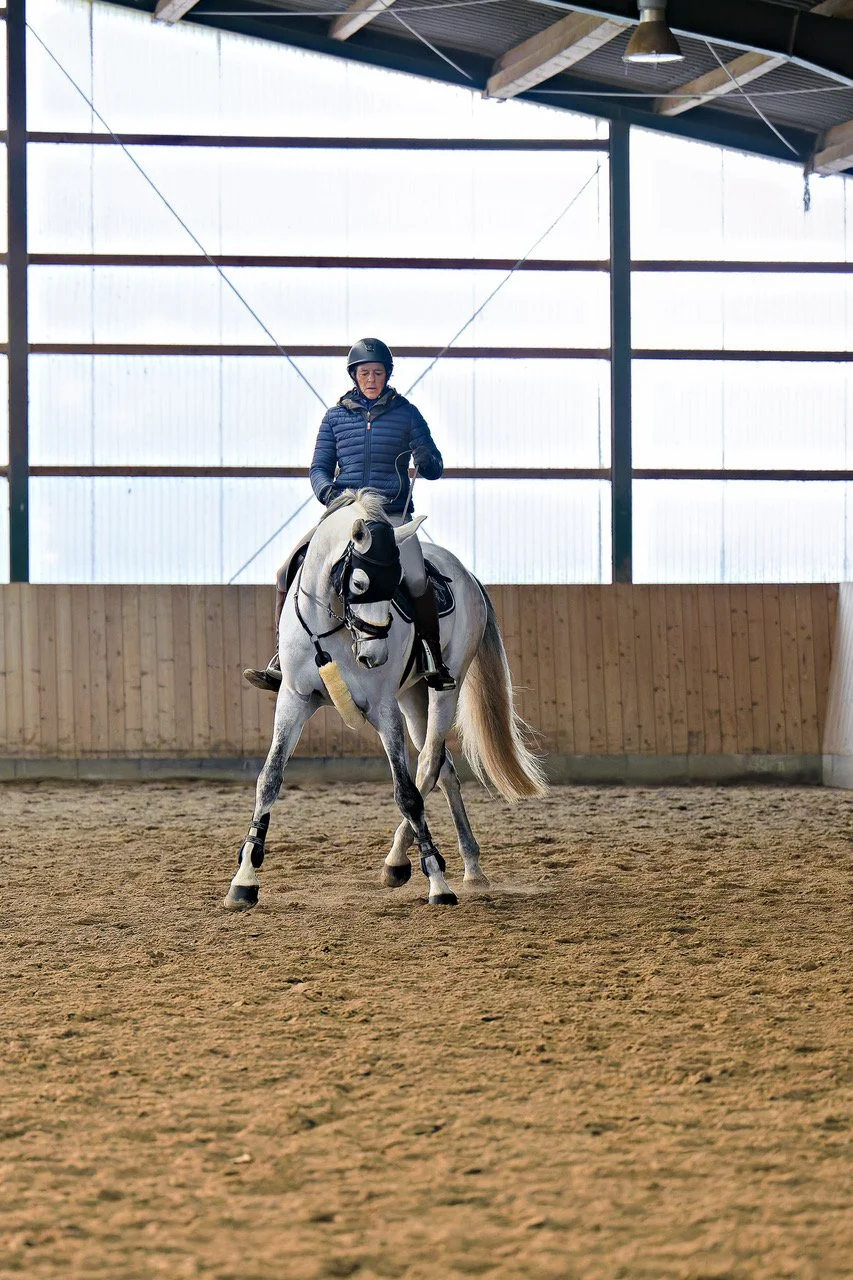
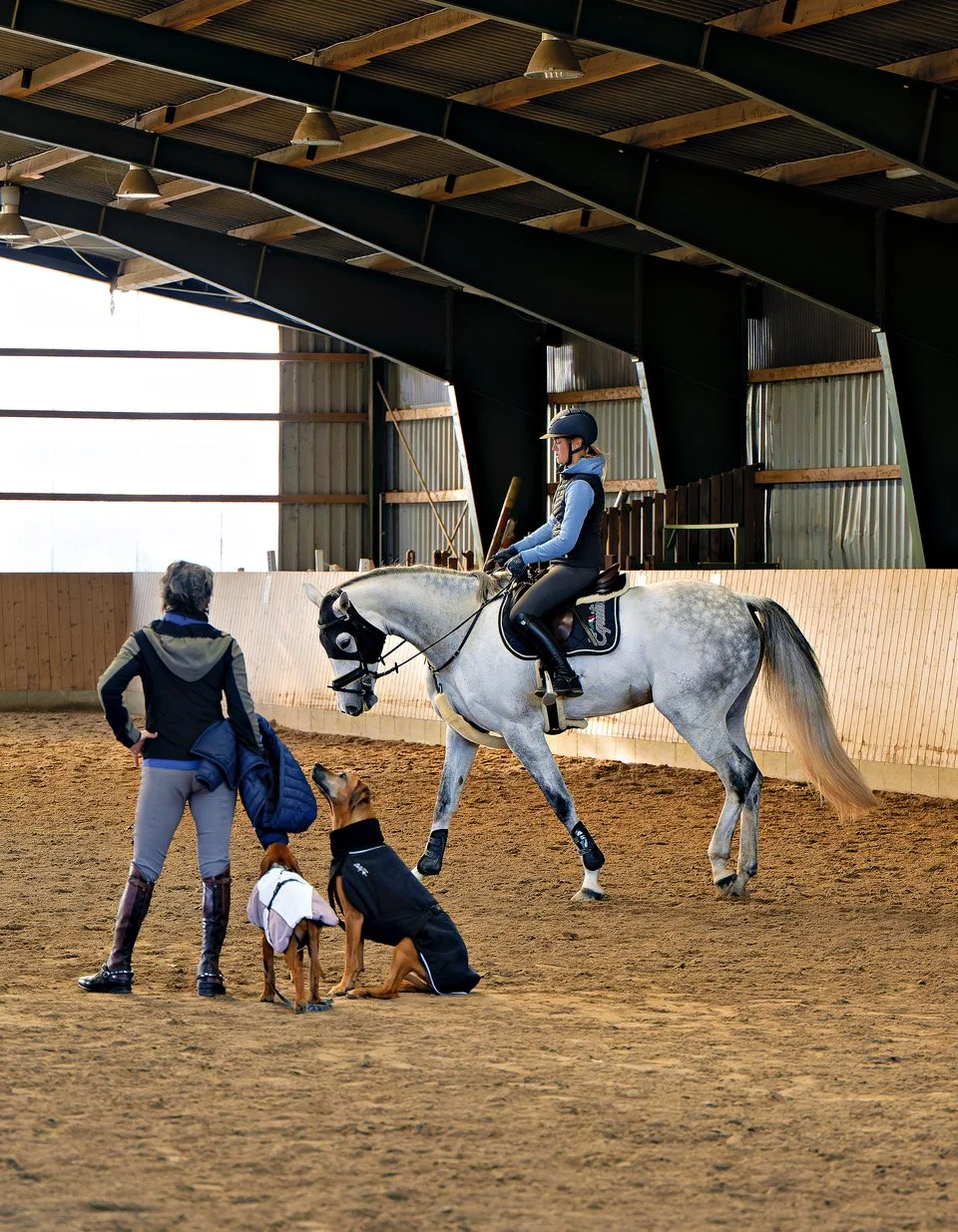
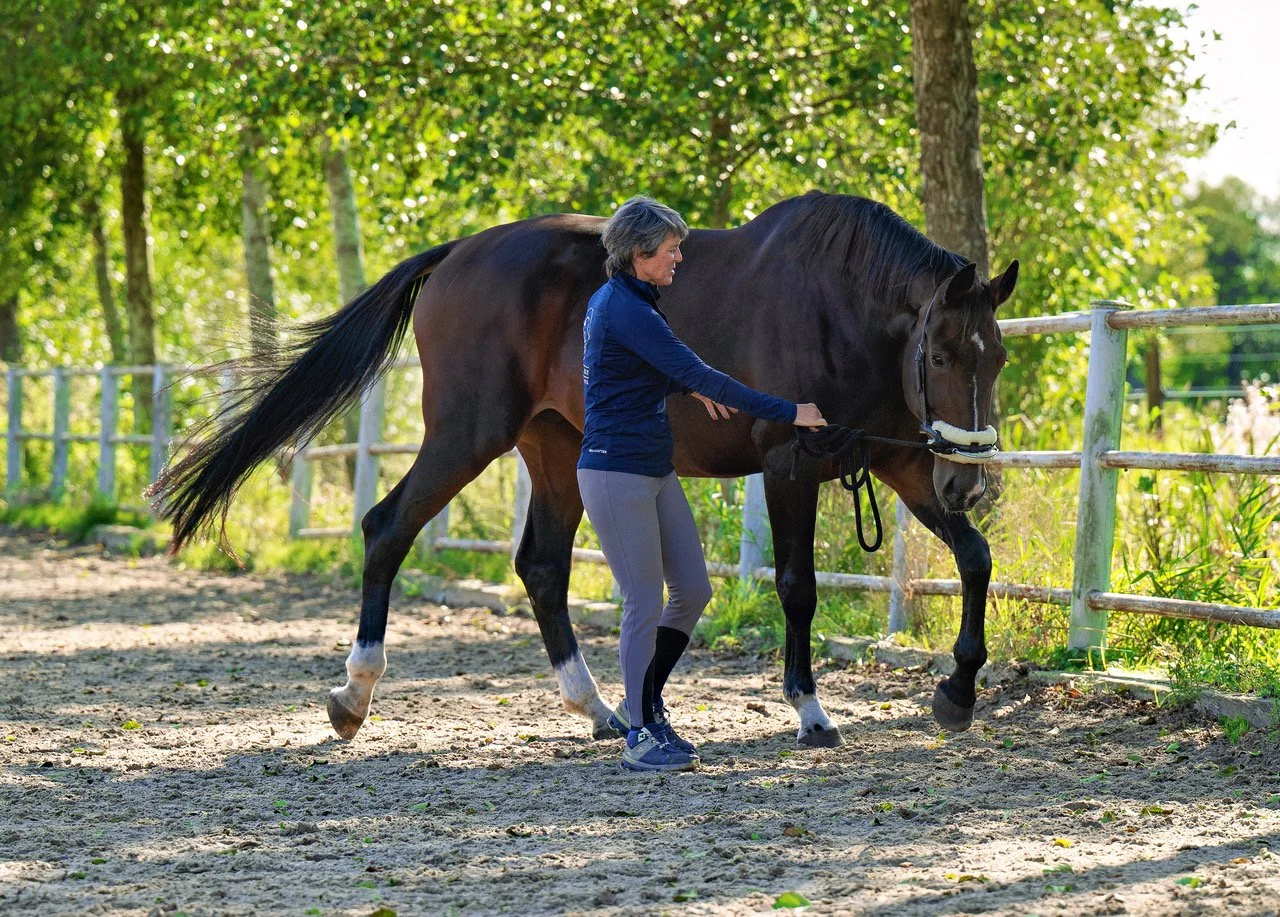
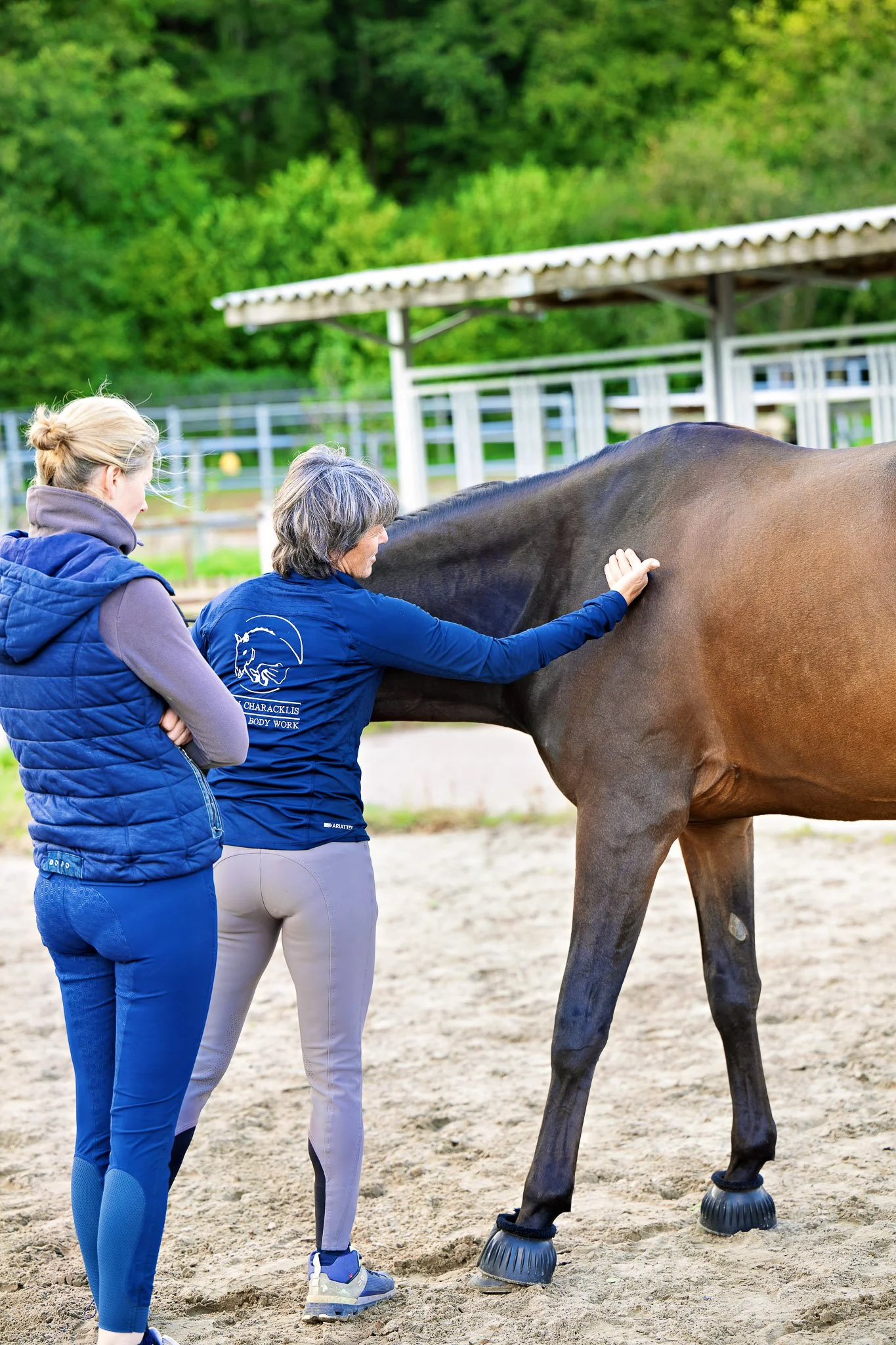
3. Functional Training To make improvements last, I work with targeted movement exercises. Depending on the situation, I work from the ground, directly on the horse, or under the rider.
4. Monitoring & Progress Regular reassessments show how your horse is developing and help optimize training – so you can reach your sporting goals together.
Good to know:
Session duration: approx. 60–90 minutes
For measurable improvements in structure and performance, I recommend a course of 3–5 sessions
Optional: Work under the rider, tailored to your sporting goals
The result: Improved biomechanics, greater performance capacity, and reduced injury risk – so your horse can reach its full potential.
Practical Benefits
What riders report after Tensegrity training:
More power and expression in the gaits: More active hindquarters, better topline, and a horse that carries itself – visible in training and at competition
More powerful take-offs and more scope: Horses jump with more energy and show better bascule over the fence
Faster reactions on course: Better balance after landing, smoother turns, and more control in technical lines
Finer communication: Horses respond more sensitively to aids – important for precise timing at the jump and exact movements in the arena
Fewer injuries and setbacks: Optimized biomechanics distribute load more evenly across joints and tendons – horses stay healthy and competitive longer

How to Book
Contact us at:
Email: erin.characklis@gmail.com
Available by appointment only.
Arrangements can be made for farm visits with travel costs applicable:
20,- Euro for up to 30 kilometer.
30,- Euro for 30-50 kilometer.
50,- Euro for a 50-100 kilometer.
You can find us in Nübbel:
Hof Moholz
Moholz 3
24809 Nübbel
Client Feedback
"Minimum 5 stars for Erin and her amazing work! From the very first treatment, I became an absolute fan of Erin, her expertise, and her interaction with the horses. I've never seen anyone take so much time and put so much passion into their work! Thanks to Erin, my horse is more relaxed and significantly more responsive. The progress my gelding has made is largely due to Erin! She will continue to be an important part of my horse's training!"
Nadine with Krümi, 5 year old Holsteiner gelding

“I see the work Erin does with my sport horses as a preventive measure to avoid wear and tear and injuries. I continually notice how well the horses feel after her treatment and how freely they move afterward. I wish I had been able to offer this training opportunity to my horses earlier. I would recommend this to any rider who values the healthy development of their horse.”
Jörg, Professional rider, with his show jumpers.
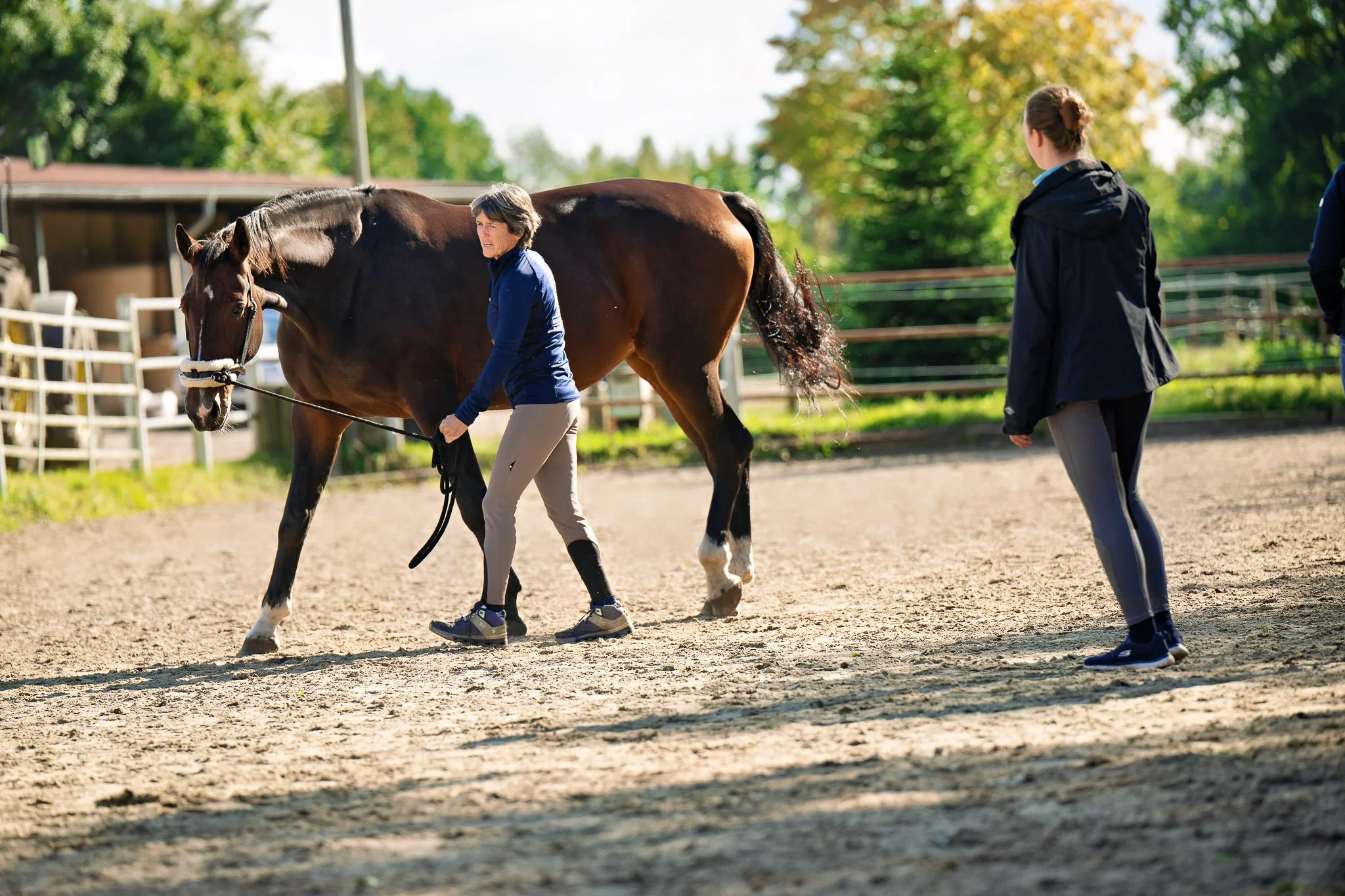
“I met Erin a few years ago when I bought a horse from her. She has continued to support us to this day. I had no prior experience with tensegrity training or anything similar with horses. Thanks to Erin, we learned how to not only provide a good experience for our sport horses but also keep them fit and supported through osteopathy and tensegrity training. These concepts have become indispensable in our daily work. The results speak for themselves.”
Peter with Cody and Sven, 9 and 8 year old showjumping horses.

“Erin is an absolute recommendation for me, and I wouldn't want to miss the training with her. I came to her to learn Horse Tensegrity Training for my horse, who had issues with proper muscle development due to his ECVM/ECRM diagnosis. Erin was a true blessing for us. Her expertise, calm demeanor with the horses, and patient explanations helped me apply her training at home. The results showed quickly in my horse's body and his increasingly relaxed demeanor. In every training session with Erin, my horse makes further progress. There’s no sign of his previous limitations, and he has become a fantastic riding horse. Erin trains with Horse Tensegrity Training on the ground and also under saddle, doing so with such sensitivity that I can trust her completely with my horse. Her approach is always pro-horse and at the pace that the horse needs. Erin has become an essential part of our training, and my horse and I are glad to have found her.”
Katja with Raven, 6 year old Hannoveraner gelding
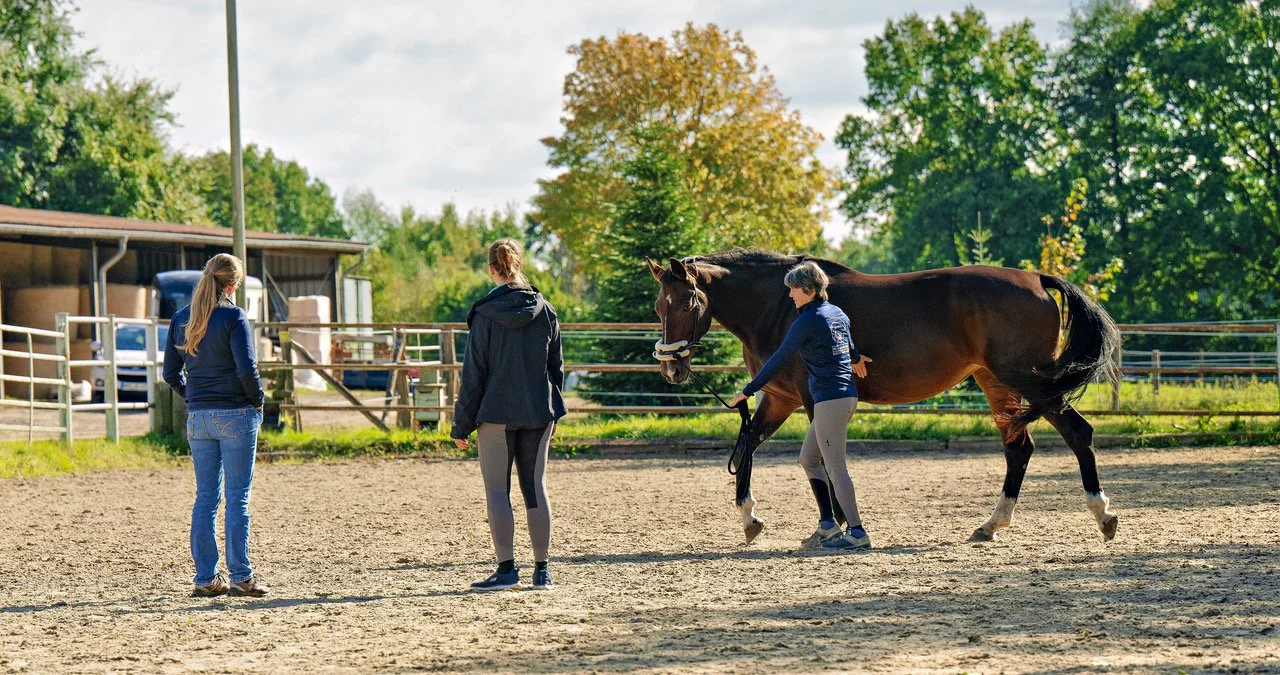
“For many years, I have appreciated Erin not only as a person. Her professional commitment in handling and working with horses is always empathetic, fair, and always "pro-horse." This quality continues to impress me time and again. When Erin told me about her training as an osteopath focusing on tensegrity therapy (which I had never heard of before), I knew this was something for me and my senior Haflinger.
Unfortunately, I can no longer gymnasticize the old gentleman enough from the saddle. Through tensegrity therapy, I now have a new way to effectively gymnasticize him from the ground, providing variety in his daily routine, engaging his body and mind, serving his health, and further strengthening the bond between us.
My environmentally oriented Haflinger has always had difficulties relaxing and letting go. His top line was often tight and thus rather short. Even after just two training sessions with Erin, and my rather novice implementation at home, amazing progress has been evident.
He works concentrated and attentively with me. His feedback through sighing and licking his lips, along with a noticeable extension of his entire top line through the engagement of his trunk muscles and thus the arching of his back, shows me how satisfied and comfortable he feels with this therapy. The only downside is that I only learned about this wonderful and effective way of working now.
I sincerely thank Erin for her support and wish her all the best in her new venture.”
Sabine with Nimbus, 22 year old Haflinger gelding